
A practical home cleaning routine focuses on dividing tasks into manageable daily habits like wiping down counters and clearing surfaces of clutter. By simplifying your supplies and removing unnecessary items, you can maintain a tidy space with less effort and more efficiency. This minimalist approach ensures that busy households stay organized through consistent, small actions rather than overwhelming chores.
Maintaining a home often feels like a losing battle against the clock and the clutter. You spend your weekends catching up on chores only to find the mess has returned by Monday morning. This cycle is exhausting; it steals your rest and the time you should be spending with your loved ones. At Thelmas Shops, we believe a refined home care strategy begins with intentionality and curated simplicity rather than a cabinet overflowing with specialized cleaners. In this guide, we move beyond basic tidying to help you master a truly manageable routine. You will discover how to streamline your supplies, implement efficient daily habits, and utilize zonal cleaning methods tailored for active households. We will also demystify popular productivity rules to ensure your living space remains a sanctuary of calm instead of a source of constant stress.
Why Your Home Cleaning Routine Starts with Less Stuff

Establishing an effective home cleaning routine often fails not because of a lack of effort, but because of a surplus of inventory. In Duchesne, where life moves at a pace that values family and the outdoors, spending hours shuffling items from one surface to another is a poor use of time. The efficiency of your routine is directly tied to the number of objects you have to navigate. Every extra item sitting on a kitchen counter or bathroom vanity acts as a clutter speed bump.
Consider the mechanics of wiping down a surface. If a counter is clear, a single pass with a cloth takes seconds. If that same counter holds a decorative tray, three canisters, and a knife block, you must move each item, wipe underneath it, and return it to its precise spot. When you multiply this friction across every room in the house, the physical labor of cleaning doubles or triples. By reducing the number of non-essential items, you eliminate these micro-tasks that drain your energy and extend your cleaning time.
This approach aligns with a philosophy of simple, thoughtful living. A curated home is not an empty home; it is one where every object serves a purpose or brings genuine value. By choosing a curated selection of everyday essentials over a high volume of specialty goods, you reclaim your weekend. Through our community-focused approach, we emphasize that home care should be practical and dependable. When you stop managing excess stuff, your home cleaning routine becomes a quick reset rather than a grueling chore.
The Minimalist Kit: Cleaning Supplies You Actually Need

Once you have cleared the physical obstacles from your counters, the next step in refining your home cleaning routine involves auditing the cabinet under your sink. Most households fall into the trap of purchasing a different chemical for every finish; glass cleaners, floor polishes, granite sprays, and stainless steel waxes. This specialty inventory creates its own form of clutter, forcing you to constantly switch bottles and read labels. A streamlined kit of high-quality, multi-purpose tools is more effective and significantly faster to use.
A curated kit focuses on mechanical action and versatile chemistry rather than a shelf full of niche products. High-quality microfiber cloths are the cornerstone of this approach. Unlike paper towels that leave lint and move dust around, microfiber fibers physically lift and trap particles, often requiring only water to clean mirrors or windows. When a cleaning agent is necessary, a reliable all-purpose spray or a simple vinegar based solution handles the vast majority of household grime. Vinegar is particularly effective for cutting through soap scum and hard water deposits common in many Utah homes.
Item Type | Role in a Simple Home | Why it Outperforms Specialty Goods |
|---|---|---|
Microfiber Cloths | Dusting, glass, and polishing | Traps dirt instead of spreading it; reusable. |
All-Purpose Spray | Counters, tables, and cabinets | Replaces five different surface-specific sprays. |
Vinegar Solution | Descaling and heavy degreasing | Non-toxic, inexpensive, and cuts mineral buildup. |
Durable Scrub Brushes | Grout, corners, and textures | Provides mechanical leverage that chemicals can't match. |
By stocking a curated selection of everyday essentials rather than chasing every new cleaning trend, you reduce the decision fatigue that often stalls a cleanup. Durable scrub brushes provide the necessary friction for tough spots without the need for harsh, abrasive powders. This minimalist approach ensures that when you start your daily tasks, you aren't digging through a crowded cabinet to find the right bottle. You simply grab your kit and move through the house with purpose.
The Daily 6: Habits for a Manageable House Cleaning Routine
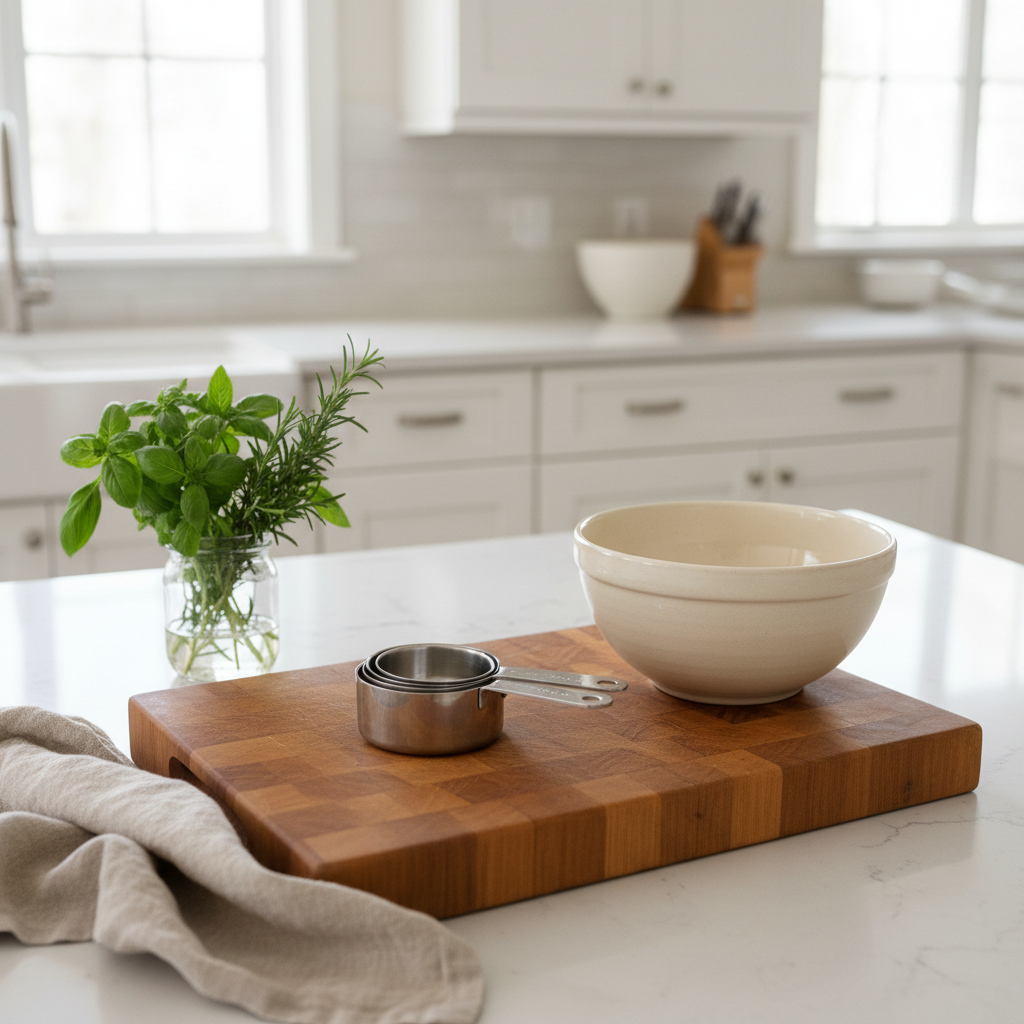
Moving through the house with purpose is easiest when you have a predictable rhythm. A reliable home cleaning routine relies less on massive weekend efforts and more on a series of small, intentional repetitions. For busy families in Duchesne, the most effective way to maintain order without feeling overwhelmed is habit stacking. This technique involves anchoring a new task to an existing part of your day; by performing these small actions at the same time every morning or evening, they transition from chores into automatic background processes.
The Daily 6 represents the essential baseline for a functional home, designed to keep the environment manageable for working parents:
Making the bed: This is the primary visual win for the bedroom. It signals that the room is in order and discourages clutter from accumulating on the bed throughout the day.
One load of laundry start to finish: You can avoid the build-up of clothing by processing one load from the washer to the drawer each day. Stack this by starting the machine before leaving for work and folding during evening family time.
The 10-second wipe: Use your all-purpose spray to wipe kitchen counters immediately after meal preparation. Removing crumbs and spills in real-time prevents them from becoming dried-on obstacles that require heavy scrubbing later.
Dealing with mail immediately: Paper clutter is a primary source of household friction. Sort mail over the recycling bin as soon as it enters the house. File or shred what remains immediately to keep surfaces clear.
Resetting the dishwasher: Empty the dishwasher in the morning while the coffee brews. This ensures a vacant space for dirty dishes throughout the day, preventing them from piling up in the sink and creating a visual burden.
The 10-minute evening sweep: Before bed, walk through common areas to return stray items to their designated places. For parents managing school schedules and local activities, this reset ensures the morning rush begins in a functional space rather than amidst yesterday’s leftovers.
These habits rely on having the right tools ready and accessible. By maintaining a curated selection of everyday essentials, you ensure that a 10-second wipe does not turn into a five-minute search for a clean cloth. When these actions become reflexive, the home remains manageable even during the busiest work weeks. Our community-focused approach prioritizes these simple, sustainable systems that respect your time and energy.
Weekly Zonal Cleaning for Working Moms and Busy Families
While the Daily 6 maintains a functional baseline, the deeper tasks of a home cleaning routine require a different strategy to avoid the dreaded cleaning day. For many families in Duchesne, Saturday is better spent at the reservoir or exploring local trails than scrubbing baseboards. The zonal cleaning method breaks these larger chores into manageable, 20 to 30 minute daily blocks focused on specific areas of the home. This prevents the accumulation of dirt that typically necessitates a grueling weekend marathon.
By assigning a theme to each weekday, you ensure every part of the home receives attention without it becoming a secondary job. This schedule assumes you already have your curated selection of everyday essentials at the ready, allowing you to move directly into the task without preparation delay.
Day | Focus Area | Key Tasks |
|---|---|---|
Monday | Bathrooms | Scrub toilets, mirrors, and vanity surfaces. |
Tuesday | Floors | Vacuum high-traffic areas and mop hard surfaces. |
Wednesday | Dusting | Wipe blinds, electronics, and shelving. |
Thursday | Kitchen | Deep clean the stovetop, microwave, and sink. |
Friday | Flex / Inventory | Finish lingering laundry and check supply levels. |
This rotation works because it limits the mental load. On Tuesday, you do not need to worry about the dust on the bookshelf; you only need to focus on the floors. By the time Friday evening arrives, the house is already clean. This approach is particularly effective for working parents who need to protect their downtime. In a community where family time is a priority, our community-focused approach encourages these efficient systems. By spreading the effort throughout the work week, you reclaim your Saturday for what truly matters, ensuring your home remains a place of rest rather than a constant source of labor.
Understanding the Cleaning Rules: 5-5-5, 6/10, and 3-3-3 Explained
Building on a zonal schedule requires a clear framework for execution. When a day feels too short for a full zone, shorthand rules provide a roadmap to maintain progress. These numeric systems offer a standardized approach to home maintenance, removing the guesswork of where to start and ensuring the environment stays functional.
The 5-5-5 rule serves as an effective tool for a quick reset. It involves picking up five misplaced items, wiping down five distinct surfaces, and dedicating five minutes to a single deep task, such as cleaning the microwave or scrubbing the sink. This method is particularly useful for maintaining a curated selection of everyday essentials without letting grime accumulate.
For residents focusing on reducing household inventory, the 3-3-3 decluttering rule simplifies the process. By selecting three items from a cluttered area and deciding to keep, donate, or toss each one, you avoid the mental fatigue of large-scale organizing. Meanwhile, the 6/10 rule provides a macro view of the home cleaning routine. It combines six non-negotiable daily habits with ten broader weekly tasks. This structure ensures that essential maintenance happens consistently. Our community-focused approach prioritizes these practical methods because they turn complex household management into a series of predictable, repeatable wins that respect your time.
Small Town Simplicity: How Curated Shopping Eases Home Care

A simplified home environment begins with a simplified shopping experience. In Duchesne, maintaining a manageable home cleaning routine is easier when you avoid the inventory creep caused by bulk purchases and impulse buys. By selecting a curated selection of everyday essentials, you ensure every item brought into your house serves a clear purpose. This reduces the physical labor of moving and dusting around excess objects that provide little utility.
Our community-focused approach at Thelmas Shops prioritizes high-quality, multi-purpose goods that outperform a cabinet full of niche products. Choosing dependable, local essentials means you have less to store, less to organize, and more time for your family. When your shopping is intentional, your home stays functional, turning household maintenance into a brief reset instead of an ongoing struggle with clutter.